Setting up your Price Lists

In this article
Use the Price Lists page to manage different pricing structures for your customers and agents. You can create multiple price lists to handle different scenarios, such as standard pricing, express service rates, or VIP memberships.
Contents
Contents
Consumer Price Lists
Accessing Price Lists
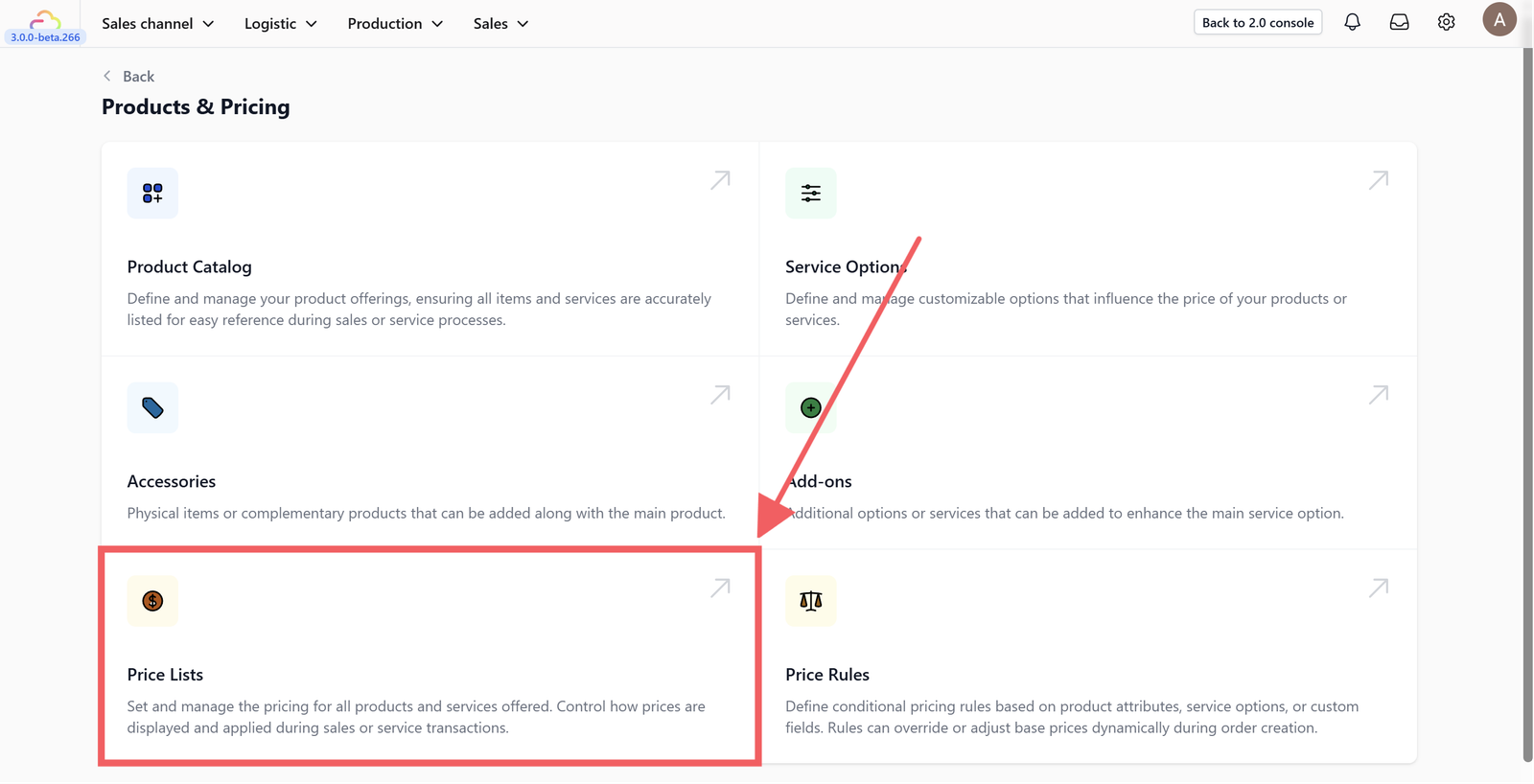
Click on Price Lists under the Product & Pricing page.
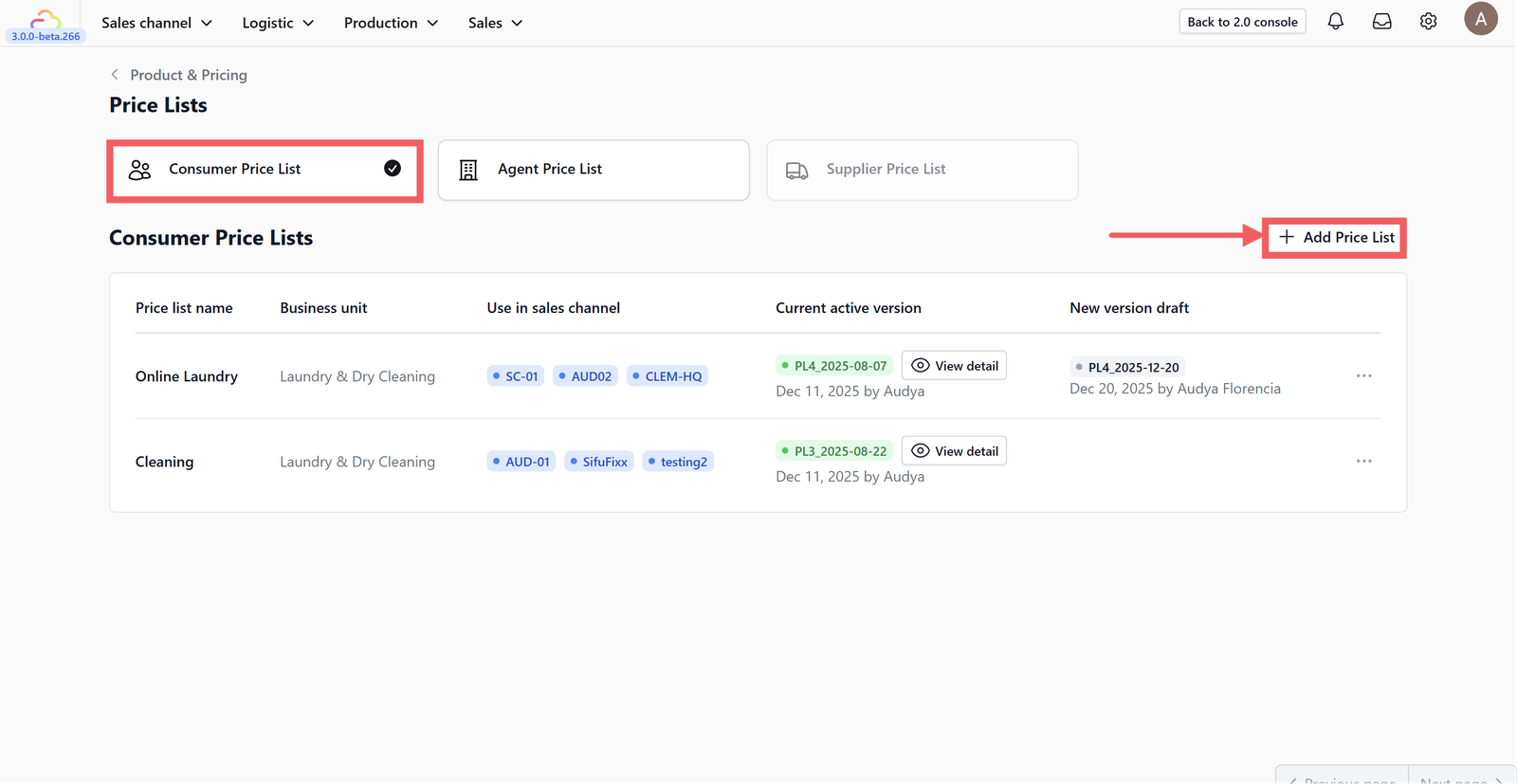
You will enter the Consumer Price Lists tab by default. Here, you can view all existing lists.To create a new list, click the +Add Price List button in the top right corner.
Creating a New Price List
When creating a price list, complete the following fields:
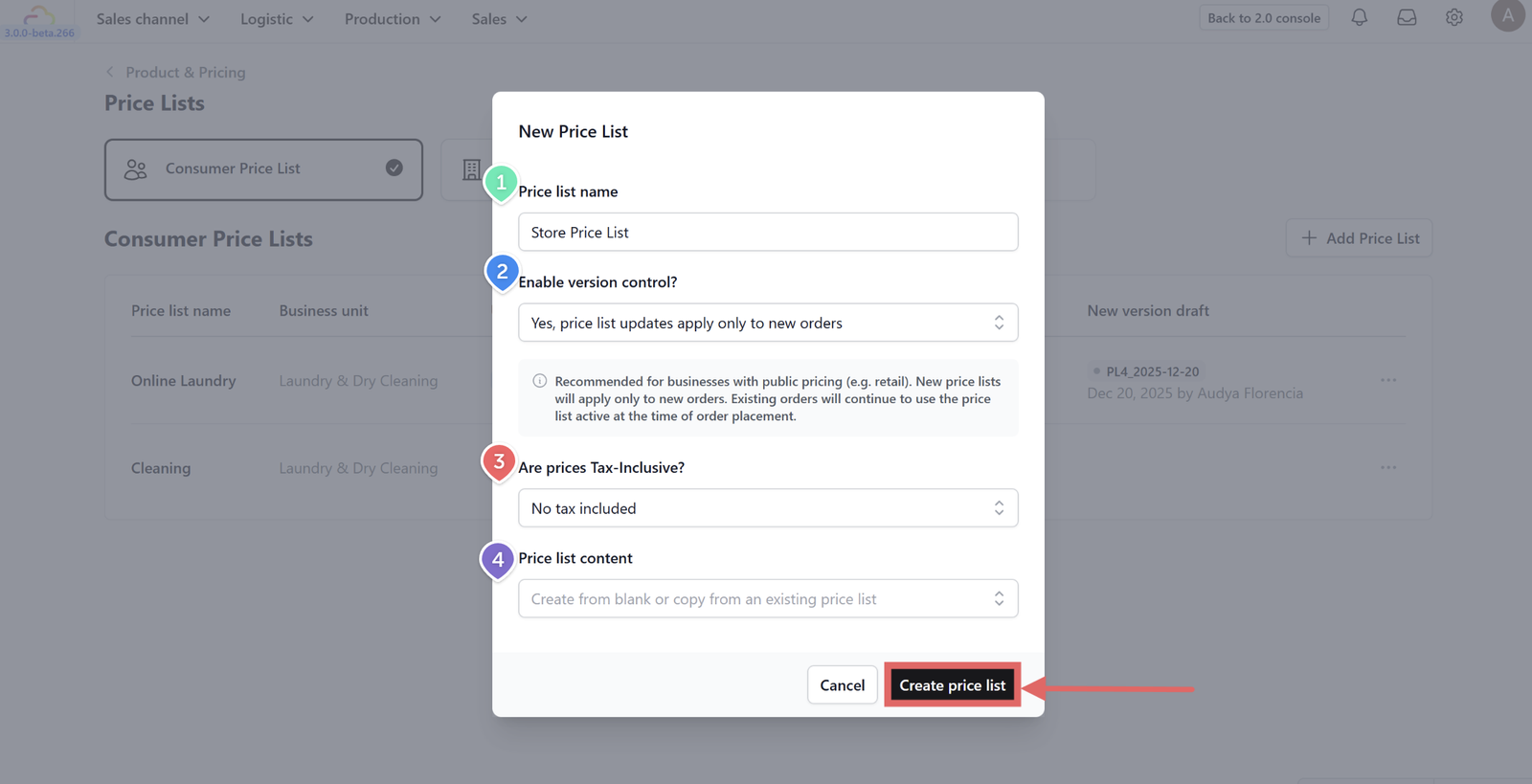
1. Price List Name Enter a name that clearly identifies the pricing tier.
2. Enable Version Control Choose how updates affect orders:
- Yes: Price list updates apply only to new orders. Previous orders keep their original pricing. This is best for maintaining historical accuracy.
- No: Price list updates apply to all orders, including open ones. This is useful if you are correcting a pricing error.
3. Are Prices Tax Inclusive? Determine how tax is calculated:
- No, Tax Excluded: The price shown is the base price. Tax is calculated at checkout based on your settings.
- Yes, GST Included: The price shown is the final amount the customer pays. You must input the specific GST rate.
- Yes, VAT Included: The price shown is the final amount. You must input the specific VAT rate.
4. Price List Content
- Copy from existing: Select an existing price list from the dropdown to duplicate its structure and prices.
- Leave empty: Start from scratch. You will manually add products from your Product Catalog.
Editing the Price List
Once created, the editor page will open.

If you copied an existing price list:
- Tax Toggle: You can switch between tax-inclusive or exclusive modes here.
- Categories: View your service categories. You can rename them or drag to reorder.
- Search Bar: Use this to quickly find a specific item to edit.
- Add Product: Click the dropdown to manually add items from your Product Catalog.
- Pricing Column: Click on any price field to adjust the value for that product.
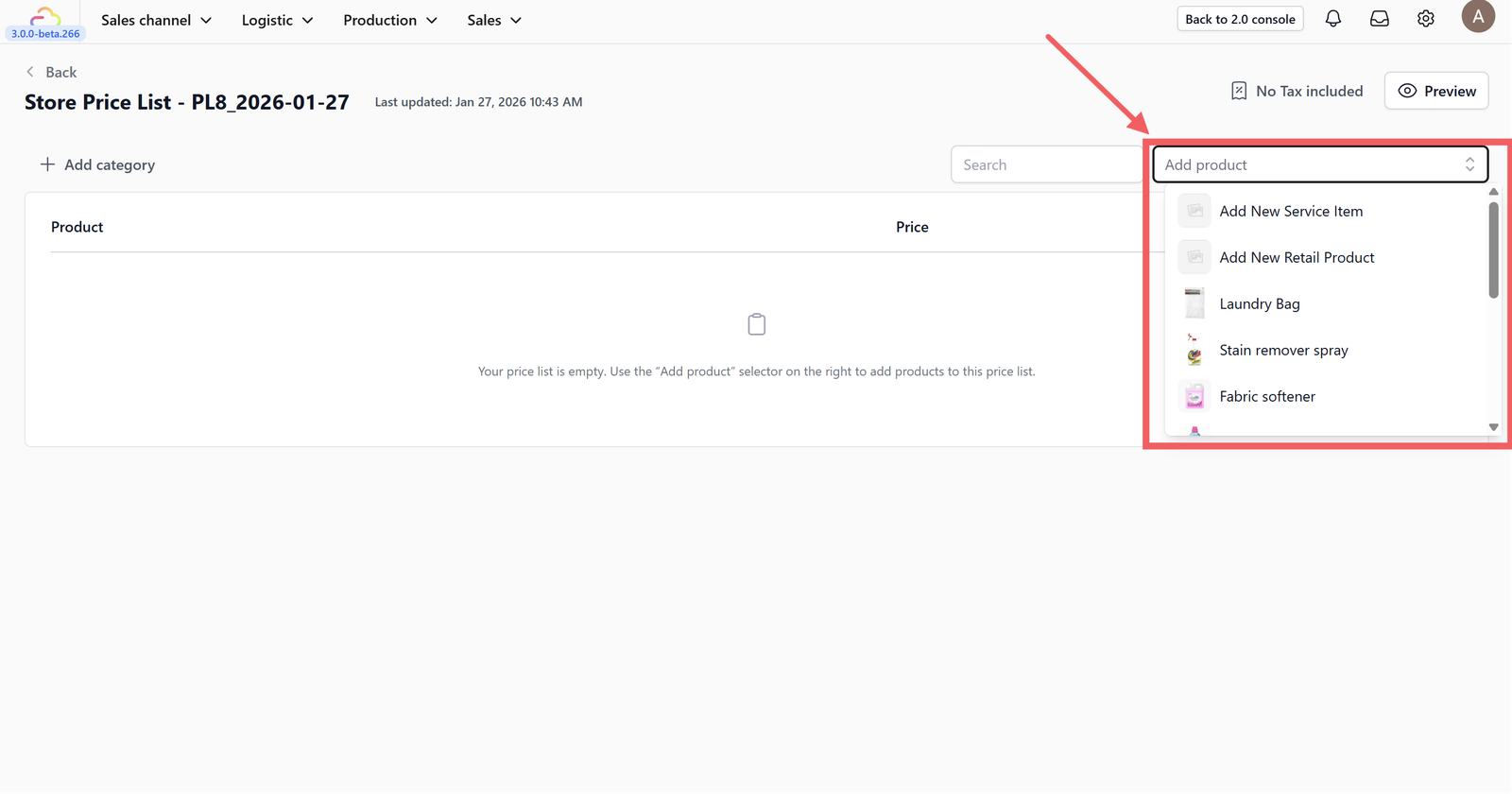
If you started with an empty price list: The table will be blank. Use the Add Product dropdown to populate the list.
Preview & Publish
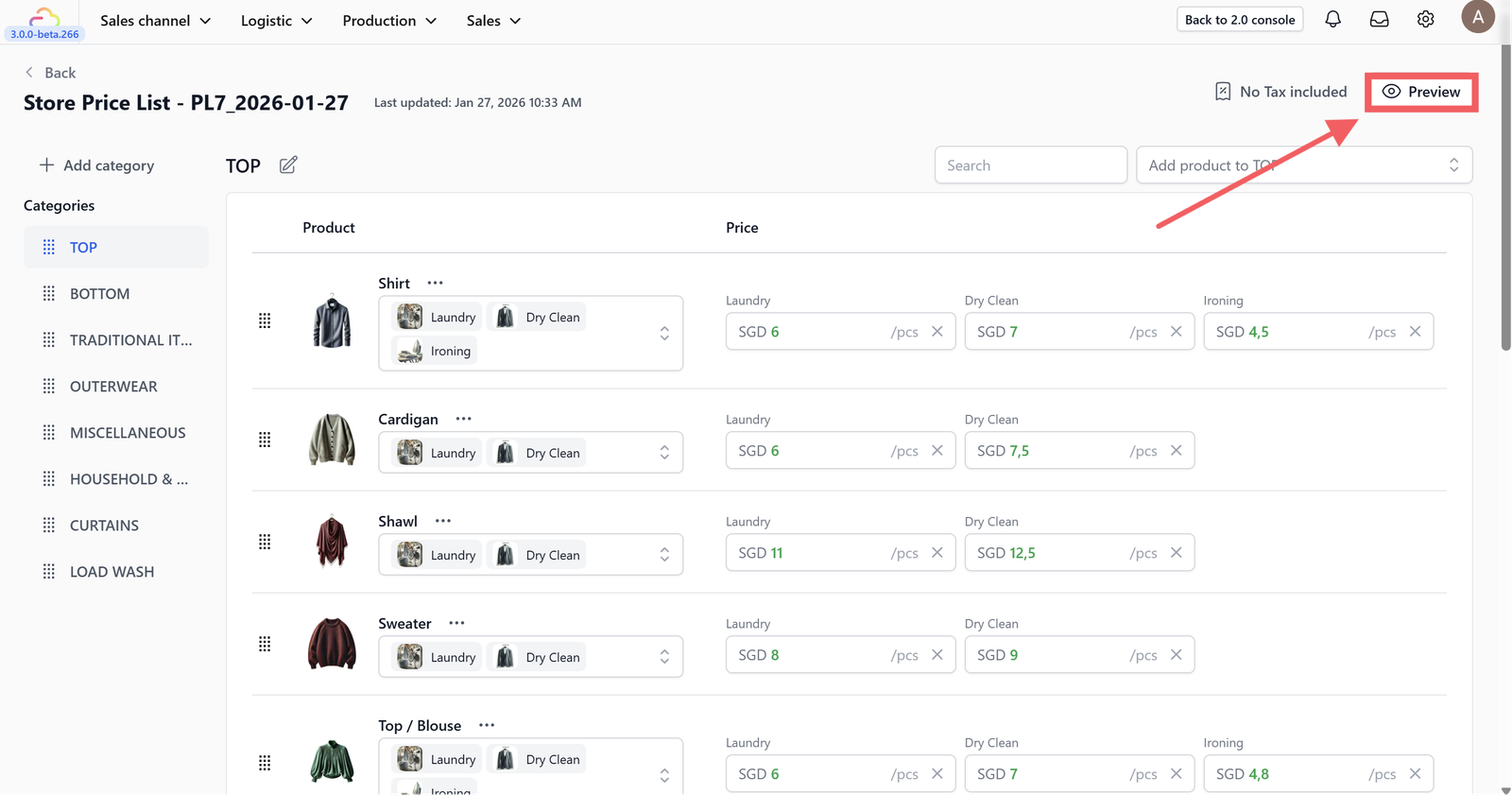
Preview: Click the Preview button to review how the prices will look to the end-user.

Publish: Click Publish.
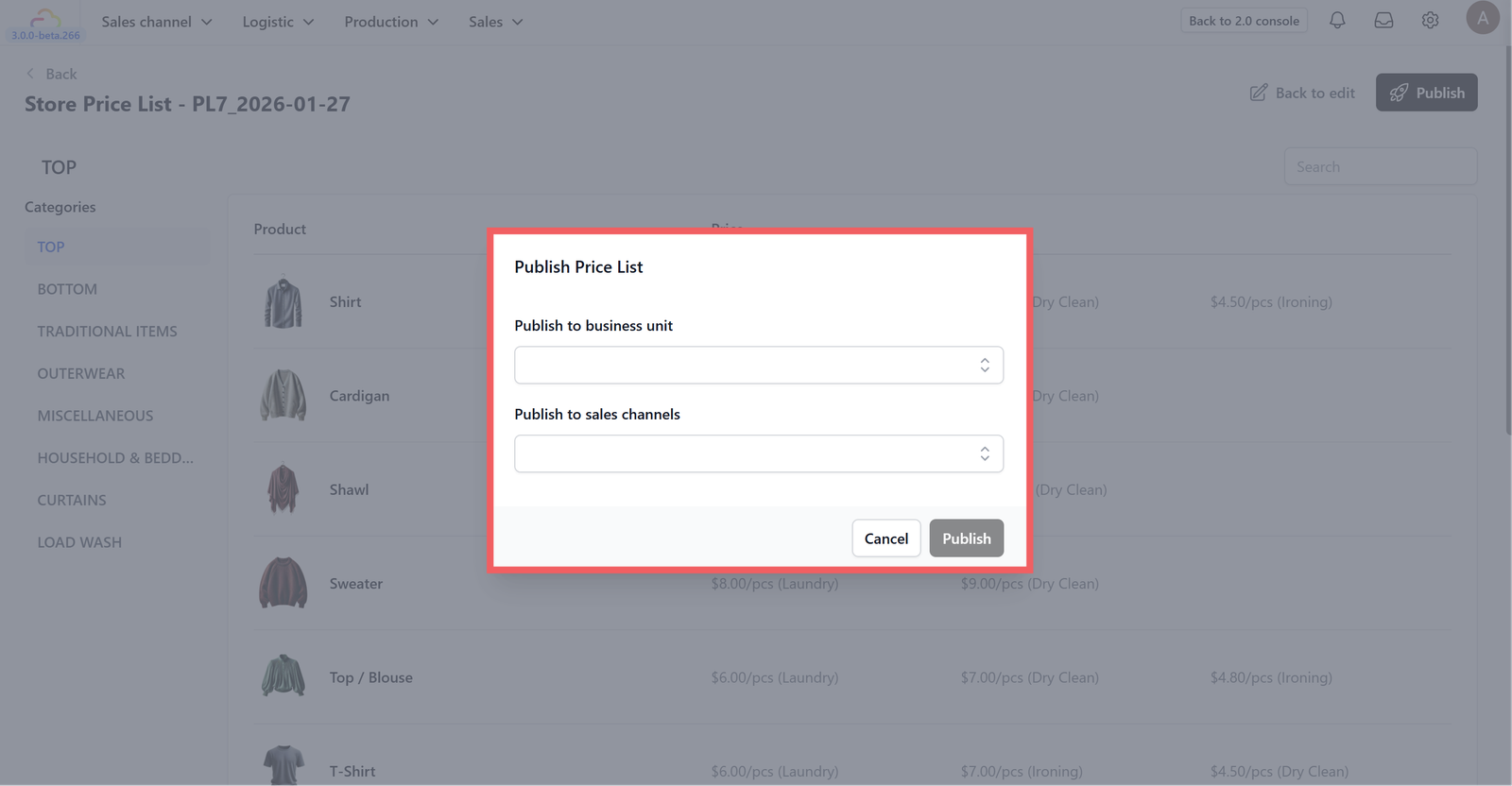
A modal will appear asking for configuration:
- Business Unit: Select which business unit this pricing belongs to.
- Sales Channel: Select which sales channels (e.g., POS, Mobile App) can use this list.
Once confirmed, the price list will appear in the main table.
Managing Active Price Lists
On the main Consumer Price Lists page, you can manage published lists using the table actions:
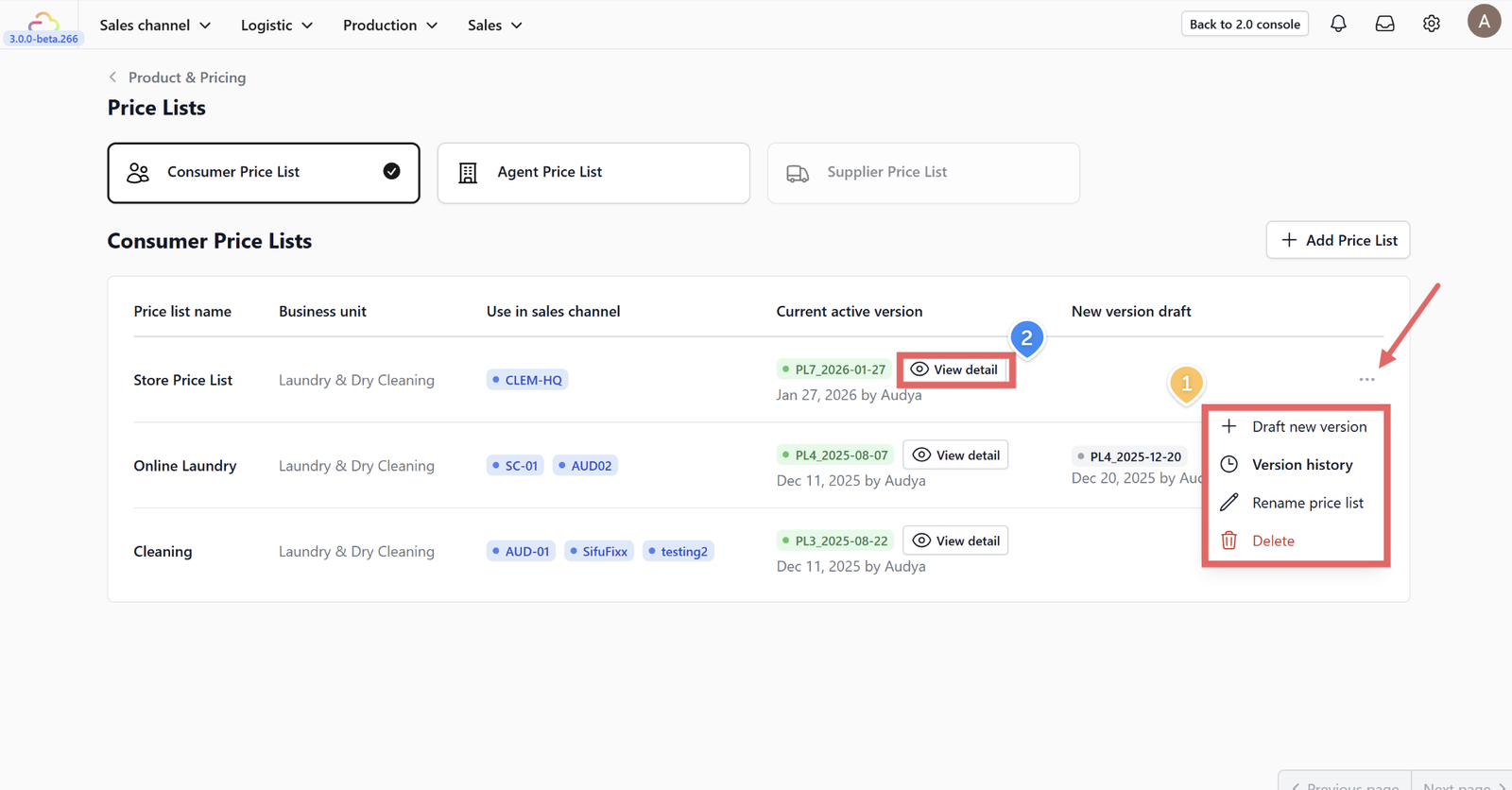
- More Options (Three Dots Menu):
- Draft New Version: Edit the current price list. This creates a new draft without affecting the live version immediately.
- Version History: View a log of previous versions and changes made to this list.
- Rename: Change the internal display name of the list.
- Delete: Permanently remove the price list.
2. View Detail: Click the View Detail button to see the full price list. From here, you can also Export the data.
Agent Price Lists
What is an Agent Price List? Agent Price Lists are specialized pricing structures designed for B2B partners, franchisees, or resellers. These usually feature wholesale rates or commission-based pricing.

How to set it up: The setup process is identical to the Consumer Price List. Click on the Agent Price List tab and follow the instructions above. Alternatively, you can check the detailed guide on this page: Create an Agent Price List.